

Linear Algebra: From Classroom to Real-World AI

Updated: Jul 29
Have you ever wondered how Netflix knows what you want to watch, how Instagram applies filters instantly, or how self-driving cars understand the road? Behind all these technologies lies a powerful mathematical foundation.
Linear Algebra is the fundamental language that AI uses to understand data. When you give input to an AI model—such as a photo, text, or numbers—it converts everything into lists of numbers called vectors. These vectors are arranged into tables known as matrices. The model then performs matrix operations to identify patterns step by step. For example, in an image, the computer does not see a “cat”—it only sees numerical pixel values, which it processes to detect edges, shapes, and eventually recognize objects.
In machine learning, the main goal is to adjust these matrices (called weights) so that the model gives better answers over time. Every time the model makes a mistake, it slightly changes these numbers using math. Concepts like dot product help measure how similar two things are (used in recommendations like YouTube or Netflix), and methods like PCA help reduce large data into simpler forms. So basically, the Linear Algebra you study in school is not just theory—it is actually used behind the scenes in AI systems like chatbots, recommendation engines, and even self-driving cars.
Matrices: The Engine Behind Smart Systems
In school, you’ve studied matrices, and they usually look something like this:

At first glance, it just looks like a grid of numbers. But what do these numbers actually represent? Are they placed randomly, or do they carry some hidden meaning? This is where things start to get interesting. Have you ever wondered how a blurry image becomes clear, how Instagram applies filters instantly, or how Netflix seems to recommend exactly the kind of content you enjoy? Behind all of these systems, structures like matrices are quietly doing the heavy lifting.
Let’s now look at how matrices are used in different real-world systems.
Matrix Operations Make Blurring Possible.

The image you see above (for example, of Albert Einstein) may look like a normal picture, but inside a computer, it is actually just a grid of numbers. Each small square is called a pixel, and each pixel has a value that tells how bright or dark it is. So in simple terms, an image is nothing but a matrix of numbers.
To create a blur effect, we take another small matrix (called a filter) and move it across the image. At each step, we combine the nearby pixel values and replace the center value with a new one. When this process is repeated over the whole image, the sharp differences between pixels reduce, and the image starts to look smooth or blurred. In simple words, blurring works by mixing nearby pixels so that no single pixel stands out too much.
Graphics & Game Development
For graphics and game development, we use engines like Unreal Engine, where objects can exist in both 2D and 3D spaces. These objects can be rotated, scaled, and positioned anywhere in the scene. The operations behind all of this are driven by matrices.
Let’s take a simple example. First, consider a vector (you can think of it as a matrix). When we multiply this vector by another matrix, you’ll notice that its dimensions can change — for instance, the x-axis component can shift into the y-axis, and the y-axis into the x-axis.
That’s the power of matrices!

See how, with just a simple multiplication, we changed the axes of a vector. In backend operations, the same idea is applied at scale. The same thing happens in game development — every movement, rotation, and transformation of objects is achieved through matrix operations.

Matrix Multiplication in ChatGPT
Everyone is using ChatGPT these days, but behind the scenes it’s mostly matrix multiplication doing the real work. When you type a sentence, the model doesn’t read it like humans—it converts words into numbers and arranges them into matrices. Then it uses something called attention, which basically means: “how important is each word compared to others?” This is calculated using a formula like Attention:

where Q, K, and V are just matrices. When the model multiplies Q with K^T, it figures out how strongly each word is connected to every other word. So in simple terms, matrix multiplication helps the model understand relationships between words.

After finding these relationships, the model combines this new information with the original sentence using a simple addition: This “+” is not multiplication, just normal addition, but both parts come from matrix calculations. This process happens many times inside the model, which is why it can understand context so well. So whenever you ask something to ChatGPT, just remember—it’s not magic, it’s millions of matrix multiplications happening very fast to figure out what your words really mean.
Self-Driving Cars (Tesla, Waymo) — Linear Algebra in Action
Self-driving cars (like Tesla or Waymo) use linear algebra to understand the world around them. The cameras and sensors on the car capture images and distances, but for the computer, these are just numbers arranged in matrices. For example, an image is stored as a grid of pixel values, and LiDAR sensors create 3D point clouds (again, just numbers). So, everything the car “sees”—roads, people, other cars—is first converted into mathematical data.
Now comes the real use of linear algebra. The system uses matrix operations to process this data—like changing the camera view, understanding depth, and identifying objects. Neural networks (which are built using matrix multiplication) help the car detect pedestrians, lanes, and obstacles. This is not just theory—these exact calculations are used in real self-driving systems, where millions of matrix operations happen every second to make safe driving decisions
Let’s understand this step by step.
Camera Image → Matrix (Pixels Become Numbers)
When a camera takes a photo, we see it as a picture—but a computer does not “see” images like we do. For a computer, an image is simply a grid of numbers, which we call a matrix. Imagine zooming into a photo: you’ll notice it is made up of tiny squares called pixels. Each pixel has a value that represents brightness (in a black-and-white image) or color (in a color image). These values are arranged in rows and columns, forming a matrix. So, in simple terms, an image = a matrix of numbers.

Now, this is where linear algebra becomes useful. Since the image is stored as a matrix, the computer can perform mathematical operations on it. For example, it can multiply matrices to detect edges, adjust brightness, or recognize patterns like faces or objects. In AI systems, these matrix operations are used again and again to help the model understand what is inside the image. So, what you learned in school about matrices is actually the same concept that allows computers to process and understand images in real life.
LiDAR → 3D Matrix (Point Cloud)
LiDAR (Light Detection and Ranging) is a sensor used in systems like self-driving cars to measure distance using laser light. It works by sending out thousands of tiny laser beams in all directions. When these beams hit objects like cars, roads, or people, they bounce back to the sensor. By calculating how long each beam takes to return, the system finds the exact distance of objects. Instead of forming a normal image, this data is stored as points in space, where each point has coordinates like (x, y, z). When many such points are collected together, they form a 3D point cloud, which is basically a matrix of numbers representing the real world.
Now, linear algebra helps the system understand this 3D data. Since all the points are stored as numbers in matrices, the computer can perform operations like shifting, rotating, and combining them to make sense of the surroundings. For example, it can group nearby points to identify objects like a car or a pedestrian. These calculations happen very fast and continuously, allowing the system to understand depth and distance in real time. So, the matrices you study in school are actually used here to help machines “see” and understand the world in three dimensions.

Matrix Transformations (Changing View & Perspective)
When a self-driving car captures data from cameras or LiDAR, it doesn’t always get the perfect view. Sometimes the object is at an angle, far away, or seen from a different position. To understand it correctly, the system needs to change its point of view—just like you might tilt your head or move around to see something clearly. This is done using matrix transformations. In simple terms, matrices are used to rotate, shift, or resize objects so that the system can view them from the correct perspective.
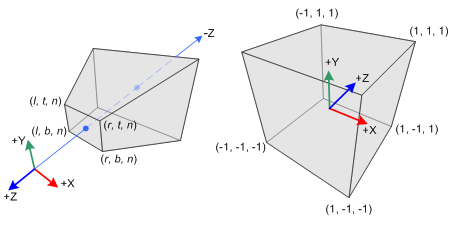
Now, this is where linear algebra plays a big role. Using matrix multiplication, the system can convert a 3D scene into a 2D image (like what you see on a screen), or adjust the position of objects to understand where they actually are in real space. For example, it can rotate a set of points to align them properly or translate them to track movement. These operations happen continuously and very fast, helping the car maintain an accurate understanding of its surroundings. So, the transformations you study in matrices are exactly what allow machines to interpret and adjust views in real-world AI systems.

Linear Algebra and matrices are not just topics for exams—they are the foundation of some of the most advanced technologies in the world today. From self-driving cars to recommendation systems and AI models, everything relies on these concepts working behind the scenes. What you learn in school is not useless theory; it is the same math that powers real-world innovation.
Understanding these ideas gives you a strong base to explore fields like AI, data science, and modern technology.
So, instead of just studying Linear Algebra to pass exams, try to see its real-world importance and build a deeper understanding of it. It can open doors to some of the most exciting and impactful careers of the future.
For more simple and practical explanations like this, follow MathsFlexTutoring, because understanding maths means understanding the future of technology.
Written by Ashish Sharma- Guest Writer for MathsFlex Tutoring and Machine Learning expert (India).


Comments